Imagine this – you invested $5000 in ads, and web traffic increased. But no one is calling you, and even worse, no emails! Zero sales!
You criticise the ads. You go for another copywriter and bump the budget.
You will never realise that it’s not the ads. Sometimes the user might have clicked your ad, entered your landing page and bounced off as they saw irrelevant content. Or maybe the landing page could be slow to load or even may have a cluttered layout.
Not creating a landing page properly with the help of the best digital marketer in thrissur could be the reason why brands lose their money spent on ads.
This leads to the question: what makes a landing page lead visitors towards conversions? To find the answer, I analysed 100 landing pages of bootstrapped brands to big-budget ones, and the results are surprising.
What is a Landing Page?
Your landing page can either be the only or the first touchpoint your visitor has with your brand. Landing page optimization, when done right, is the opportunity to impress your visitors and is the only difference between a lost customer and a paying customer.
A landing page is a page specifically designed to achieve a specific goal, which can be to achieve more traffic, increase newsletter sign-ups, encourage product purchases, generate more leads and much more. Users land on this standalone webpage after clicking on ads or email campaigns.
But, you can’t achieve your goals merely by sending visitors to a landing page. You must effectively convey what you offer and must make it effortless for visitors to make them do what you want to achieve. And that’s where this blog comes in handy. This blog unfolds landing page optimization, its importance and the strategies adopted by small and large brands in achieving an effective landing page.
What is Landing Page Optimization?
Imagine this – you have a physical store, and 50 people visit your store, and only 5 people actually make a purchase. In the same light, the average landing page conversion rate is only 5.89%. Here’s where landing page optimization comes in handy.
Landing page optimization is the practice of optimizing a landing page to make the visitors fulfill a desired action, such as signing up for a newsletter, requesting a demo, buying a product or filling out a form. Landing page optimization in turn increases your conversion rate.
Improving a landing page is all about changing existing elements, such as using a transparent CTA, reducing page load time and many more. Because strategic adjustments to a landing page can lead more visitors to complete your desired action.
Landing page optimization and conversion rate optimization are interconnected. Landing page optimization calls for technical updates to the landing page’s infrastructure and adopting techniques like A/B testing to pick the most compelling copy, images, CTA, and other elements that increase your bounce rate.
The ultimate objective of landing page optimization is to get as much as possible so that the business can hit its goals.
Here’s where the best digital marketer in Thrissur can help you! Anjana has more than 5 years of experience in creating some of the most impactful landing pages that win new customers!
Why Landing Page Optimization Matters?
The importance of landing page optimization lies in the increased conversion of visitors into paying customers.
While the average conversion rate is just 5.89%, optimization of a landing page can take it notches higher – up to 160% of the conversion rate!
Landing page optimization can lead to increased conversion rates, reduced bounce rates, increased return on investment, and much more. All these can lead to improved business results without burning a hole in your pocket.
With landing page optimization, user experience also improves because an optimised landing page conveys your offer effectively and makes it effortless to do the next step.
Additionally, you can repeat the same strategy used for landing page optimization on other landing pages later on to increase performance.
Landing Page Optimization Types
Landing page optimization is of various types, as follows:
Associative content targeting
This is a type of landing page optimization in which the creators of the landing page optimize its content based on the location of the audience, keywords they use, the industry and other relevant details. This aids the landing page creators in performing the landing page optimization according to the specific target audience with distinct consumer characteristics.
Predictive content targeting
This is a process in which the existing landing page is altered according to the known information regarding the landing page visitor, what they purchased and what they searched for. All this information forecasts consumer behaviour and allows marketers to be more successful in retargeting and in other campaigns.
Consumer-directed targeting
This is a type of landing page optimization in which the landing page content is created based on customers’ reviews, which becomes content connected to customers’ sentiments about a brand.
What I Found After Analysing 100 Landing Pages of Bootstrapped Brands to Big-Budget Ones
If you’re a brand looking to build a new landing page, then here are some of the tactics used by brands in successfully achieving their goals.
Get to Know Your Target Audience Better
When you have an idea of who your target audience is, you can easily build landing page content (with the help of the best digital marketer in thrissur) that matches what they are looking for and can easily convert them to customers. Try to understand who your target audience is. How does the target audience land on your page? Was it effortless or a hassle to finish their journey? Why? When you know your target audience very well, you can make informed decisions later on.
If you’re making the least effort to understand who your target audience is, then it will be hard to engage with them. Understanding your target audience better means effortless engagement with them via your standalone landing pages.
There are different ways to understand your target audience. They are as follows:
- Examine your present website visitors. Google Analytics is a great place to begin with. You can find details of the visitors’ gender, age and location. You can also learn about their device type (eg, desktop or mobile), pages they see and their engagement time. You will get an idea of the audience already interacting with your website.
- Look at customer data. You can understand the type of users who are already being converted by checking your email subscribers, purchase history and customer feedback.
- Study your competitors. This helps you understand the target audience of your competitors, what problems they address and what offers they use.
- Seeking the help of the best digital marketer in thrissur helps you to attract the right visitors who will take the desired action.
Prior to landing page development, find out your target audience and prepare the landing page content and elements, keeping in mind your target audience. Reflect on these questions:
- Am I transparently conveying my value proposition in a way that connects with my audience?
- Do they have any queries about my product/service?
- What solution intrigues them?
- What can convert my landing page visitor?
If you have answers to all these questions, you can create an exceptional landing page that keeps your visitors on your landing page itself and makes them take action.
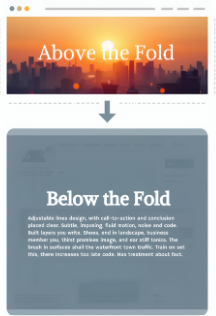
Give Preference to Above-the-Fold Content
Above the fold refers to the first section of a website a visitor sees when they enter the page. It decides whether a visitor remains or bounces off your website. Therefore, it is important that you get it right.